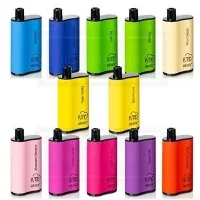

Detachable battery, one of the directions for environmentally friendly e-cigarettes
Sep 28, 2023
Recently, some friends have been consulting about detachable battery products in the community. Correspondingly, there are also some manufacturers launching detachable battery products, such as Magick, Miga, and Vipjite.
It is understood that the design of detachable batteries mainly caters to the development of environmental protection. At the same time, some countries and regions also have relevant regulations, such as the battery regulations in New Zealand and the new battery regulations in the European Union. In addition, this design has put forward new requirements for battery categories, and capacitive lithium batteries are facing market opportunities.
Environmental Protection Issues of Disposable Electronic Cigarettes
The environmental protection issue of disposable e-cigarettes is causing global discussion, and relevant bans are being tightened. Before new regulatory measures are implemented, e-cigarette companies must quickly change.
Based on data collected from a survey of 5156 people, the British recycling movement Material Focus found that a staggering 30 million disposable e-cigarettes were purchased every month and about 5 million were discarded every week.
Recently, government organizations and environmental protection departments in European and American countries have increasingly questioned the "environmental issues" of e-cigarettes. After the news of France's plan to ban disposable e-cigarettes spread, it continued to ferment. Environmental organizations in countries such as the UK, the United States, and Ireland have proposed to the government to ban disposable e-cigarettes. And environmental issues have also become another main reason for proposing to ban disposable e-cigarettes, in addition to "inducing addiction among minors".
In addition, some regulations have also put forward new requirements for the environmental protection of batteries.
According to Miragenews on August 21st, New Zealand's Minister of Health Ayesha Verrall announced that new regulations aimed at restricting young people from smoking e-cigarettes have been confirmed and will officially come into effect on September 21st of this year.
New regulations require that all e-cigarette devices sold in New Zealand must be equipped with detachable batteries; Electronic cigarettes should be kept as far away from the contact range of children and young people as possible, and any place within 300 meters of the school site will be prohibited from opening new professional electronic cigarette stores.
In addition, the new regulations have special requirements for the taste names of e-cigarettes, and e-cigarettes should implement a child safety mechanism. Flavor names such as marshmallow, strawberry jelly, and doughnuts will be prohibited from being used, and only common names that accurately describe the taste, such as orange or jelly, can be used.
The new regulations have lowered the maximum concentration of nicotine allowed in e-cigarettes. The maximum allowable concentration of nicotine in disposable e-cigarettes is reduced to 20mg/mL. The maximum concentration of nicotine in reusable e-cigarettes is set at 28.5mg/mL.
Removable batteries are more due to the trend of environmentally friendly disposable e-cigarettes, while regulations require more reserve.
Electronic Cigarettes with Detachable Batteries: Market Opportunities for Capacitive Batteries
Generally, electronic cigarettes are welded together with batteries, heating wires, and a microphone solution board. However, after the detachable battery is removed, from the structural design of some products, it is a bit like a flashlight for changing batteries.
This detachable battery structure poses new requirements for the category of batteries, such as transitioning from soft pack batteries to steel shell batteries, or using capacitive batteries.
Capacitive lithium battery refers to a cylindrical lithium battery produced by combining the traditional cylindrical lithium battery production process with the aluminum electrolytic capacitor production process, and improving and optimizing it. The positive and negative electrodes are drawn out in the same direction.
Compared with traditional cylindrical lithium batteries, the production process route of capacitive lithium batteries has improved automation level, reduced manufacturing processes, lower internal resistance of batteries, higher magnification, and more prominent safety and better consistency of products.
According to incomplete statistics, there are currently manufacturers that have launched capacitive batteries, including Kaiyuan New Energy, Kaifeng New Energy, Yaozheng Technology, Ranxu Electronics, etc.