


BANG LEGEND 150K Disposable Electronic Atomizer——Academic Technical Summary Of Engineering Parameters And System Structure
Dec 04, 2025
The BANG LEGEND 150K is one of the more complex models among current disposable electronic atomizing devices, characterized by its integrated design of multiple reservoirs, multiple heating units, and selectable flavor paths. The device's structure is designed to meet the needs of long-term use, flavor diversity, and data monitoring during use, thus possessing significant engineering research value within the disposable atomizing device category. This description aims to provide an overview of the device's physical structure, electronic control, liquid supply logic, and user interface.
1. Overall Design Concept and System Architecture
From a system perspective, the device adopts a core architecture of "three reservoirs-three coils-six modes." The three reservoirs correspond to three flavor paths, each equipped with an independent mesh coil. When the user selects a flavor mode, the internal switching structure causes the corresponding reservoir unit to take over the liquid supply task. BANG LEGEND 150K flavor selection mechanism relies on a mechanical dial structure, which changes the channel connectivity to achieve single or dual-channel combined flavor output.
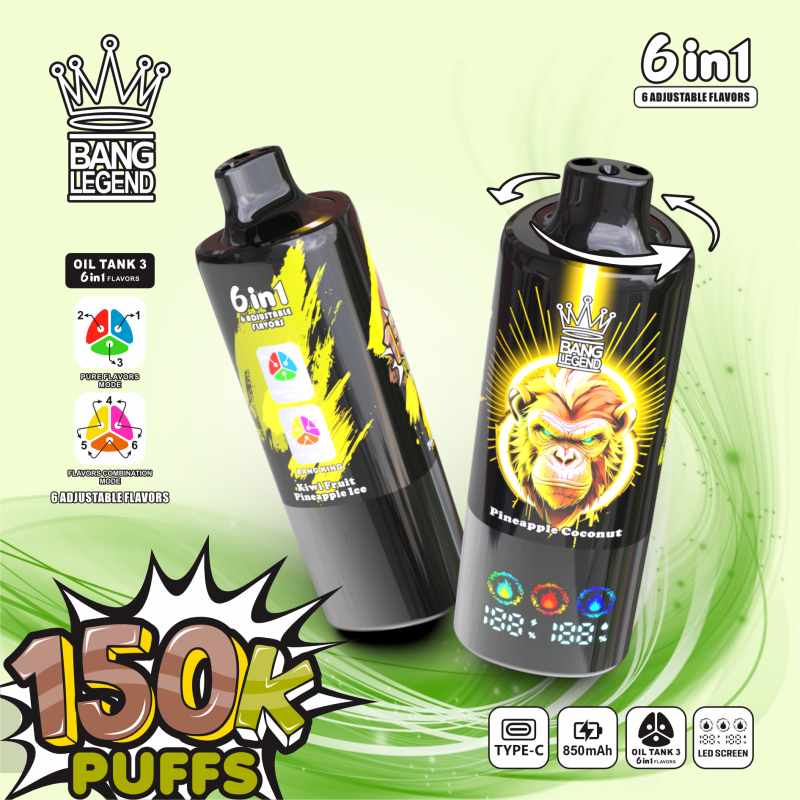
It is worth noting that this structure is relatively rare in the disposable device category, as similar products typically employ a single reservoir and a single coil system. The introduction of a multi-compartment, separate structure reduces cross-influence between flavors and provides a physical basis for multi-mode configurations. Therefore, from an engineering perspective, this device is more like a "multi-channel parallel disposable atomizer."
2. Atomization Unit and Heat Transfer System
All three heating units utilize a metal mesh structure, also known as a mesh coil. Mesh coils offer more stable heat transfer characteristics than conventional filament coils due to their wider heating surface and more uniform heat distribution. This structure also maintains sufficient atomization efficiency at lower power inputs, contributing to improved battery life.
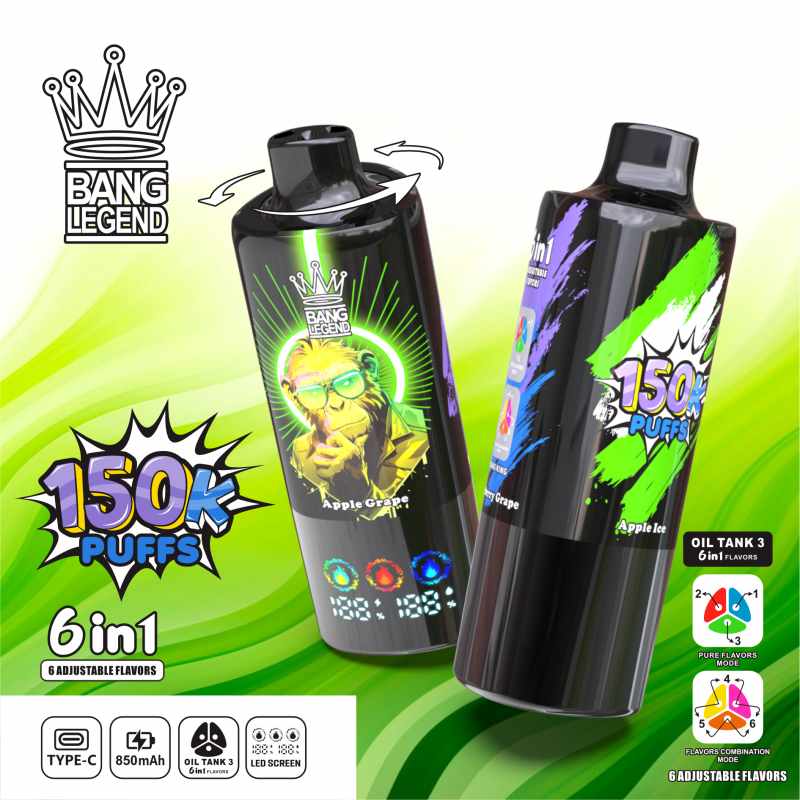
Each heating unit corresponds to an independent liquid supply core and wick channel. Different flavor liquids are stored independently, reducing flavor residue and mixing issues often found in traditional single-compartment structures. The heating process is triggered and controlled by an internal microcircuit, activating an instantaneous output mode based on signals from the suction detector.
This "multi-coil parallel but independently operable" design allows for controllable changes in heating load under different flavor combinations, enabling the device to atomize at a more stable power.
3. Flavor Path Structure and Six-Mode Switching Mechanism
The BANG LEGEND 150K device offers six flavor modes: three basic modes (A, B, and C) and three dual-mode combinations (A+B, A+C, and B+C). This structure can be viewed as a two-level combined output of a three-channel system, its logic similar to selectively paralleling three input terminals.
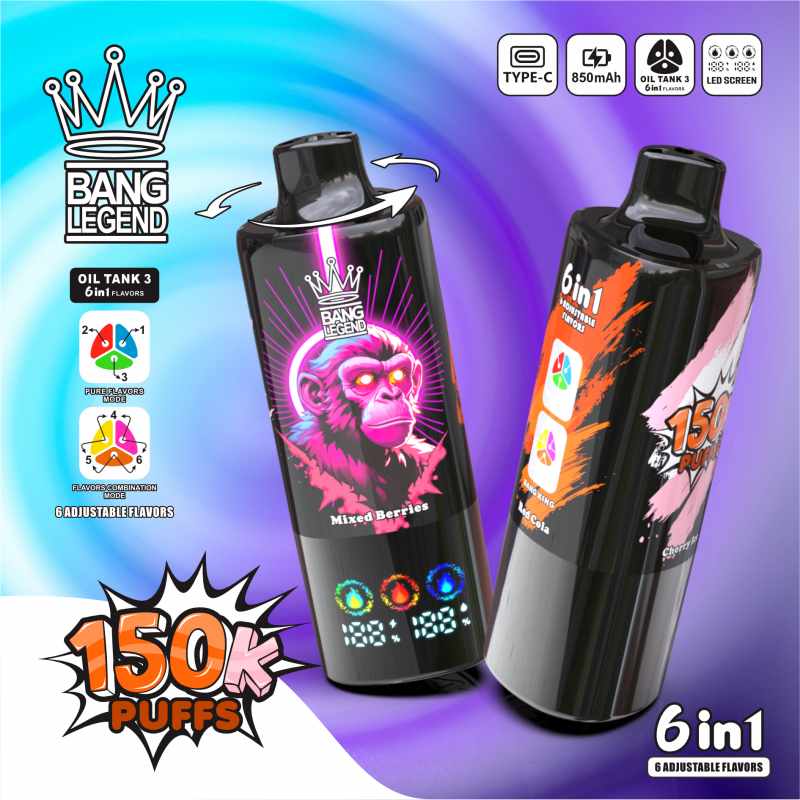
The flavor switching mechanism is controlled by a physical knob. The knob's position determines the connection method between the internal liquid guiding component and the corresponding liquid storage compartment. In practical applications, this mechanical structure has the following characteristics:
Avoids the complexity of electronic switching: Traditional electronic switching relies on electrically controlled valves or liquid supply modules, while the mechanical structure is more intuitive and less prone to failure.
Reduces the risk of accidental touches: User selection is based on direct structural rotation, without relying on touch controls or menu-driven interfaces.
Facilitates multi-flavor storage: The independence of the three compartments reduces the risk of cross-contamination of volatile components from different flavors.
The flavor switching structure operates similarly to a "miniature liquid path selector," but due to the device's size limitations, the internal liquid path is closer to a combination of multiple capillary channels.
4. Power System and Energy Management
The device has a built-in 650mAh rechargeable lithium battery and uses a Type-C interface for charging. Although the capacity is relatively small, the overall durability still supports its stated long-term use target because the device's operating power is usually kept in the low wattage range.
The power management functions include:
Real-time battery monitoring
Puff count recorder
Basic output power stabilization control
Since disposable devices typically lack complex constant voltage or constant power chips, this product is more likely to use basic PWM (Pulse Width Modulation) or MOSFET control for output stabilization, keeping output fluctuations within an acceptable range without significant heating intensity jumps.
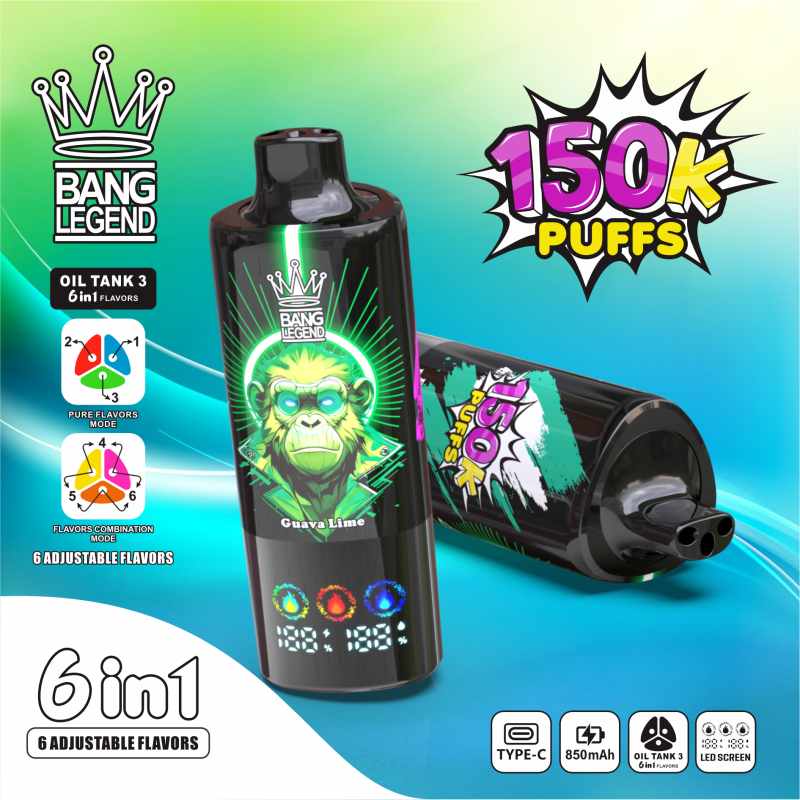
The LED display outputs three types of information: remaining battery power, current puff count, and flavor mode. The inclusion of a statistical display is a relatively uncommon design for disposable devices, providing some data reference for usage cycle management.
5. Nicotine Concentration Configuration and Supply Structure
This model is available in various nicotine concentrations (0%, 2%, 3%, 5%) to meet the differences in regulatory policies in various regions. Different concentrations of atomizing liquid are pre-filled into three independent storage compartments, maintaining a consistent concentration to avoid concentration jumps during mode switching. This is for technical description only and does not constitute a recommendation for usage.

In terms of supply structure, the device is typically packaged in boxes of ten individual units, catering to the needs of distribution, inventory, or retail scenarios. This packaging method is common in the disposable device supply chain.
6. Summary of Engineering Features
The BANG LEGEND 150K device has the following structural features:

A multi-compartment, separate liquid management system helps reduce flavor crosstalk.
A multi-mode output structure utilizes channel combinations to achieve six flavor modes.
A parallel architecture of mesh heating units strikes a balance between energy consumption and atomization efficiency.
A rechargeable power system combined with an LED information display enhances data visibility during use.
A high nominal suction value reflects its high-capacity liquid storage and low-power optimization strategy, typical of long-cycle disposable devices.


