

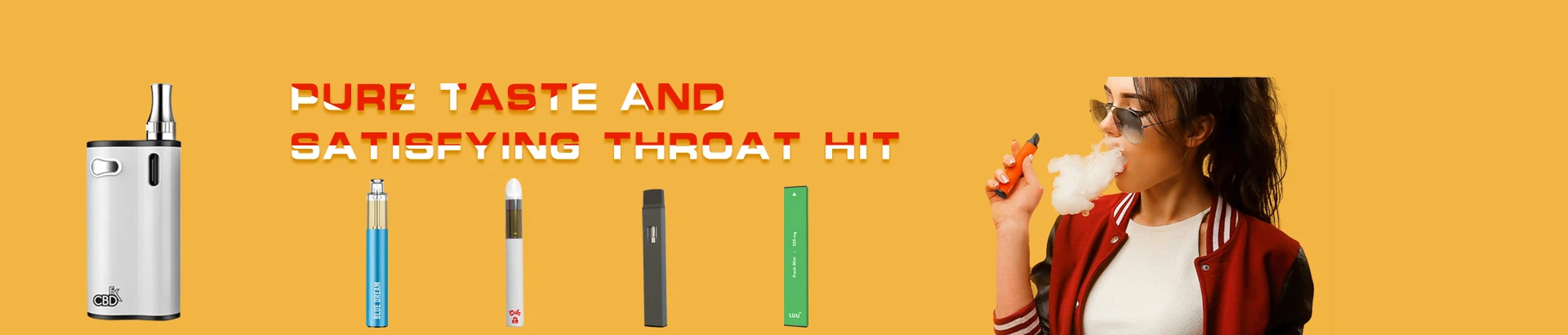
One Of The Popular Appearances Of E-cigarettes: Gradient Color, Exquisite And Timeless
Aug 22, 2023
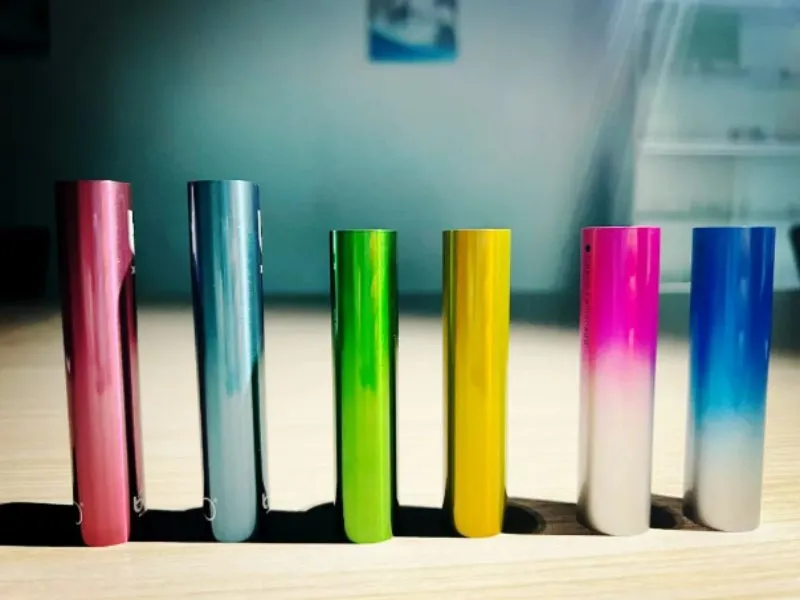
Throughout the evolution of e-cigarette products, whether they were once popular or currently popular, whether they were past blockbusters or new products, there is a type of appearance that is often seen, which is the gradient color appearance.
A gradient color can be a transition from one color to another, or it can be a gradient of single color depth.
By utilizing rich color levels and flow, the product surface presents a high-end and exquisite texture, adding unique visual appeal and artistry to the product.

There are two main reasons why gradient colors have been popular for a long time: firstly, they look good, and secondly, they have stable craftsmanship and cost advantages.
There are many processes that can produce gradient colors, such as anodizing, spraying, PVD coating, UV transfer printing, screen printing, color printing, etc., but not every process can achieve both stable yield and cost advantages.
In the electronic cigarette industry, the commonly used processes for gradient color are anodizing and spraying, and there are also new gradient color processes for reference, such as gradient color injection molding process.
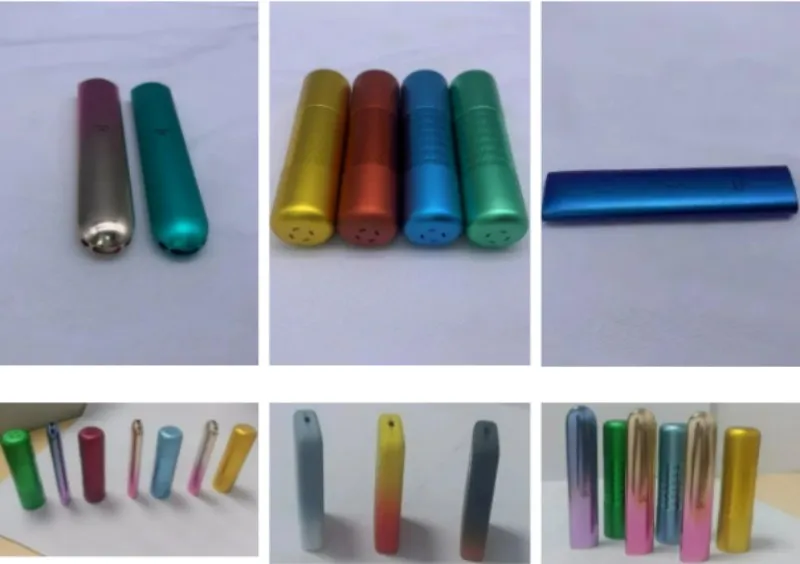
1. Anodizing
Anodizing is the formation of an oxide film on the surface of a metal, and pure anodizing only includes the process of generating an anodic oxide film.
If metal needs to be colored, it needs to be further dyed and sealed to achieve the coloring effect. This process is suitable for aluminum alloy workpieces.
Gradient color is achieved by adjusting the dyeing time of dyes in the dyeing pool. During the dyeing process, dyes enter the molecular gaps of the oxide film. The longer the dyeing time, the more dyes enter, and the darker the color.
By controlling the time the parts that need to be dyed stay in the dye through a computer, such as gradually removing the workpiece from the dye, a uniform gradient effect can be achieved.
The main process flow is: degreasing → alkaline corrosion → chemical polishing → neutralization → anodizing → dyeing → sealing → hot water washing → drying.
2. Spray painting (also known as spray painting)
Spraying is a processing method that uses a spray gun to atomize paint and apply it to the surface of an object.
Coatings with wear resistance, corrosion resistance, insulation, conductivity, insulation, sealing, lubrication, and other special mechanical physical and chemical properties can be obtained on various substrates.
The application range is very extensive and belongs to traditional processes.
Gradient color spraying is a spraying equipment that utilizes two or more color coatings. By modifying the equipment structure, one color can slowly transition to another color, forming a new decorative effect. The equipment operation is relatively simple and efficient.
Simple gradient color spraying can be achieved, easy to mass produce, and high yield.
During the spraying process, the product is overlaid with multiple layers of colors (3-4 layers), with the core of controlling the thickness of the coating. Each layer gradually transitions from one color to another.
In addition, the selection of coatings is also crucial. The selected coatings not only have wear resistance, corrosion resistance, and other properties for the surface substrate of the plastic shell, but also need to have a decorative effect on the exterior. The brightness effect of the color is also important.
The main process flow is: substrate treatment → sequentially spraying functional primer, gradient paint, and glossy paint → baking/self drying.

3. Gradient injection molding process
Gradient injection molding is a process recently launched by Abbott, which uses a dual color molding method to achieve gap injection of two different colored materials through precise injection control of injection molding machines and molds, resulting in gradient color or multi-layer co injection products.
However, there is currently no further information on the application of this process in the e-cigarette industry. Here is a brief introduction for interested friends to refer to.

4. Other
Of course, there are many processes that can achieve gradient colors, such as PVD coating, UV transfer printing, silk screen printing, color printing, and so on; Different processes are suitable for different needs, such as spraying, anodizing, and injection molding, which are more suitable for large-scale production; Short term mass production, high efficiency, and UV printing can be considered.


